
Hiring the right candidate is only half the challenge. Getting them through pre-employment screening without unnecessary delays can be just as important.
When background checks take longer than expected, start dates can be pushed back, recruitment teams spend more time chasing information, and candidates may accept opportunities elsewhere.
The good news? Not every delay is unavoidable. While some checks depend on external organisations and statutory processing times, there are practical ways employers can speed up background checks without compromising accuracy or compliance.
From automating repetitive tasks to collecting candidate information more efficiently, small improvements to your screening process can make a significant difference.
Drawing on our experience supporting UK employers with employment screening, we’ve put together eight practical tips to help you achieve fast background checks, reduce unnecessary administration and keep your hiring plans on track.
What are fast background checks?
Fast background checks are employment screening processes designed to minimise unnecessary delays between initiating a check and receiving the results.
Depending on the role and industry, employers may need to conduct several types of employment screening background checks, including Right to Work checks, DBS checks, employment history verification, identity verification and qualification checks.
Each check has different requirements and processing times. Some can be completed relatively quickly through digital verification, while others rely on responses from third parties, such as previous employers, educational institutions or government agencies.
The key to faster background checks isn’t necessarily making the checks themselves quicker. It’s removing the unnecessary steps that slow down the process.
For example, collecting the correct candidate information the first time, automating requests and tracking progress through one system can reduce the administrative work surrounding employment screening.
This is particularly important for organisations recruiting regularly or managing multiple candidates at different stages of onboarding.
Why does speed matter in background checks?
In a competitive recruitment market, a lengthy screening process can create problems for both employers and candidates.
Candidates want clarity about when they can start, while HR and recruitment teams need confidence that all necessary checks are progressing as expected.
When screening involves multiple systems, manual paperwork and repeated follow-ups, even straightforward checks can become time-consuming.
The benefits of faster background checks
- Reduce candidate drop-off: A smoother screening experience helps maintain candidate engagement between accepting an offer and starting work.
- Keep onboarding plans on track: Reducing avoidable delays makes it easier to coordinate start dates, training and workforce requirements.
- Reduce administrative workload: Automation and digital data collection free up HR teams from repetitive tasks and manual follow-ups.
- Improve the candidate experience: Clear instructions, accessible digital forms and fewer requests for duplicate information make screening easier to complete.
- Maintain compliance and accuracy: Efficient workflows help ensure the correct information, documentation and authorisations are collected without cutting corners.
Ultimately, faster screening should benefit everyone involved. Candidates experience a more straightforward process, while employers gain better visibility and control over their recruitment timelines.
8 ways to speed up background checks
Whether you’re screening a handful of new starters or managing high-volume recruitment, the following steps can help make your background check process more efficient.
1. Choose a reliable background check provider
One of the most important decisions employers can make is choosing the right background check provider.
While cost is an important consideration, selecting a provider based on price alone can overlook factors that affect the efficiency of your screening process.
Look for a provider that offers reliable service, responsive support, accurate reporting and technology that simplifies the management of employment checks.
It’s also worth considering how the provider handles different types of screening. If your organisation requires DBS checks, Right to Work verification, employment history checks and other screening services, managing these through multiple providers can create additional administration.
Using a provider that supports multiple checks through a centralised system can make it easier to manage candidate progress and reduce unnecessary handovers.
When evaluating providers, ask how they manage incomplete applications, how you can track outstanding checks and what support is available when an application is delayed.
A reliable provider should also be transparent about turnaround times, including which stages of the process are outside its control.
For employers exploring different options, our guide to software for background checks explains how screening technology can support a more efficient recruitment process.
2. Integrate background checks with your ATS
If your recruitment team uses an Applicant Tracking System (ATS), integrating it with your background screening provider can help reduce repetitive administration.
Without integration, candidate details may need to be transferred manually between recruitment software and screening platforms.
This creates additional work and increases the risk of data entry errors, missing information or candidates being overlooked.
An integrated process can help recruitment teams initiate background checks from their existing recruitment workflow, reducing the need to switch between systems.
Depending on the integration and software capabilities, it may also support automated data transfers and screening status updates.
For organisations managing large numbers of candidates, these improvements can make a meaningful difference.
Rather than spending time repeatedly entering candidate details or checking separate systems, recruitment teams can focus on progressing candidates through the hiring process.
Practical tip: Review how many manual steps your team completes between a candidate accepting an offer and their background checks being initiated. These are often good opportunities for integration or automation.
3. Automate repetitive screening tasks
Automation is one of the most effective ways to reduce unnecessary administration in employment background checks.
Many traditional screening processes involve repetitive tasks, including sending forms, requesting information, checking application progress and notifying colleagues when action is required.
When these tasks are managed manually, delays can occur simply because someone is unavailable or an email has been missed.
Automated screening workflows can help reduce these issues by handling routine administrative steps more consistently.
Depending on the software used, automation may support:
- Sending candidate screening invitations and requests for information.
- Collecting and validating required application details.
- Managing electronic authorisations.
- Providing screening progress updates.
- Highlighting outstanding actions and incomplete applications.
- Delivering results and maintaining records within a central system.
For example, rather than manually checking whether each candidate has completed their forms, a screening platform can make outstanding actions visible so your team knows where attention is needed.

This is particularly useful when managing checks across multiple departments, locations or recruitment campaigns.
Importantly, automation should support the screening process rather than replace necessary human judgement. Employers must still ensure that checks are appropriate for the role and that any results requiring review are assessed correctly.
4. Collect candidate information online
Incomplete or inaccurate candidate information is a common cause of avoidable background check delays.
If a candidate submits incorrect personal details, misses part of their address history or fails to provide required documentation, the application may need to be returned for clarification.
This creates additional communication between the candidate, employer and screening provider.
Using online data collection can help make the process more straightforward.
Digital forms allow candidates to submit information directly, reducing the need for recruitment teams to transfer details from paper forms or emails.

Where supported, online forms can also highlight missing mandatory fields and guide candidates through the information required for their checks.
This helps improve the quality of information collected before applications are submitted.
For employers, online data collection can also provide better visibility over which candidates have completed their information and which still need to take action.
Practical tip: Make sure candidates receive clear instructions about the information they need before starting their application. This can help prevent incomplete submissions and repeated requests for documentation.
5. Make background checks candidate-friendly
A fast background check process shouldn’t come at the expense of the candidate experience.
In fact, making screening easier for candidates can help employers avoid delays caused by incomplete forms, missed emails, and difficulties submitting documents.
Candidates may be completing screening requirements around their existing work and personal commitments, so accessibility matters.
A paperless, mobile-friendly process allows candidates to complete information requests without relying on printed forms or unnecessary appointments.
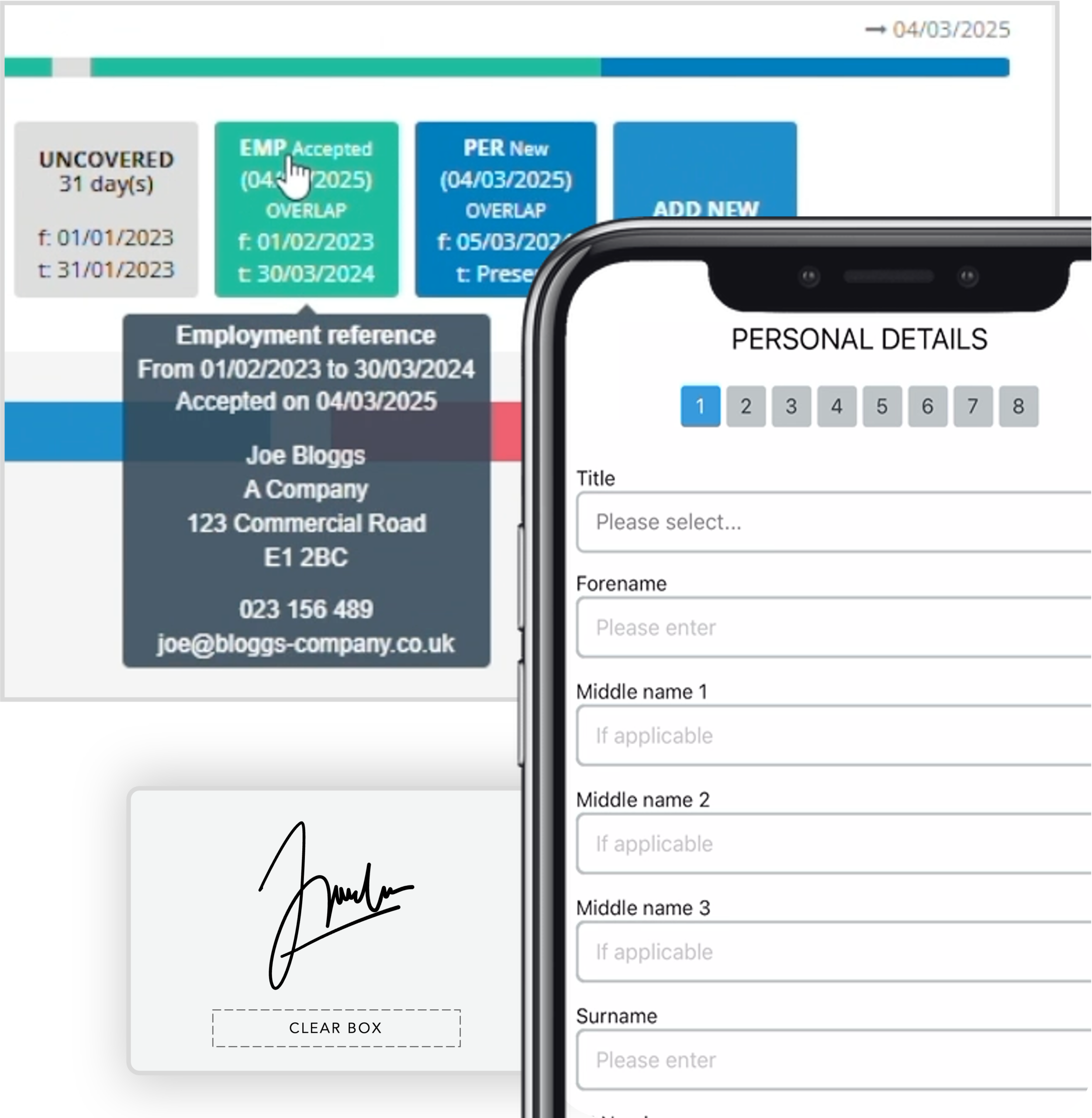
Providing a straightforward digital experience can help candidates complete their part of the screening process sooner, reducing the time recruitment teams spend chasing outstanding information.
Clear communication is equally important. Candidates should understand which checks are required, what information they need to provide and whether any further action is outstanding.
When candidates know what’s expected, they’re better equipped to complete the process accurately and promptly.
6. Use digital disclosures and authorisations
Background checks often require candidates to receive relevant information and provide appropriate authorisation before screening can proceed.
Managing these requirements through paper forms, email attachments and manual filing can add unnecessary administration.
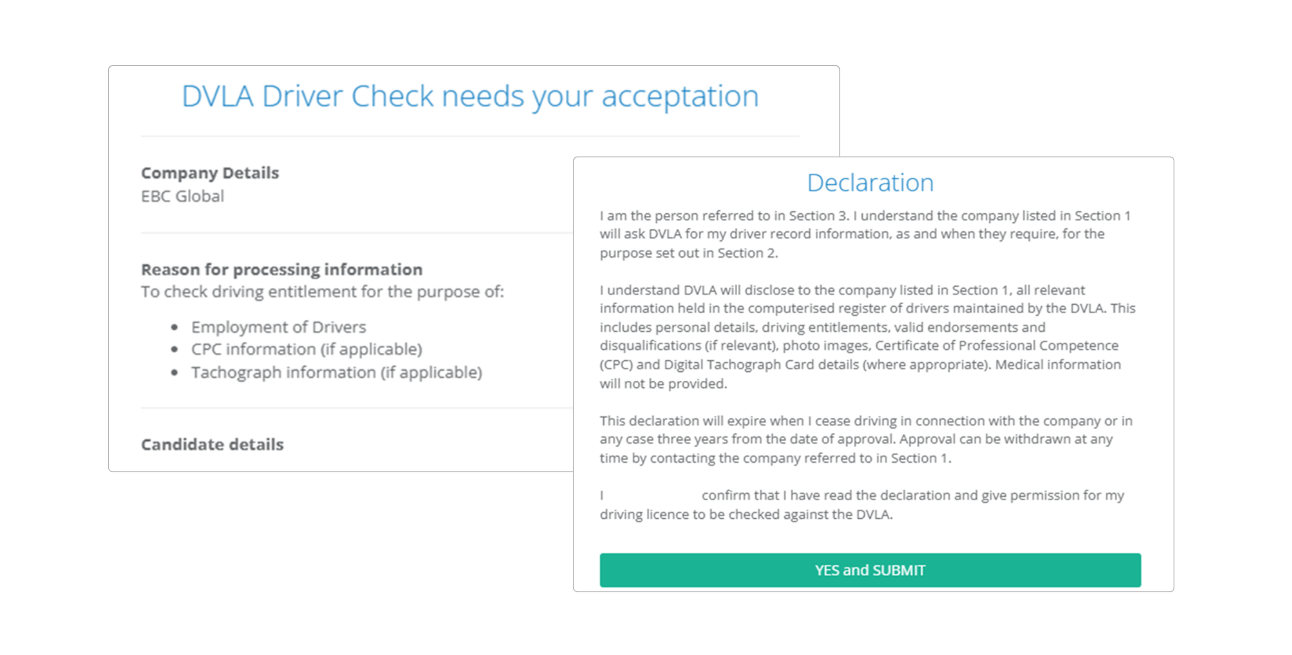
Digital disclosure and authorisation processes provide a more efficient alternative.
Where appropriate and legally permitted, employers can send the required information electronically and allow candidates to review and complete authorisation documents digitally.
This can help reduce paperwork, improve record-keeping and make it easier to identify whether the necessary steps have been completed.
Digital systems may also provide time-stamped records and secure storage of completed documentation, supporting audit and compliance requirements.
However, it’s important to remember that different employment checks have different legal and procedural requirements.
Employers must ensure that their screening activities have an appropriate lawful basis under UK data protection legislation and that any check-specific consent, authorisation or notification requirements are satisfied.
Digital processes can make these steps easier to administer, but they do not remove the need to complete them correctly.
7. Provide complete and accurate documentation
One of the simplest ways to speed up background checks is to make sure the correct information is supplied from the beginning.
Missing documents and inaccurate details can lead to applications being delayed, rejected or returned for clarification.
The information required will depend on the type of check being conducted.
For example, employers may need to collect relevant identity documents, address history, previous names, employment details or other information specific to the screening requirement.
Some checks may also require a National Insurance number, date of birth or additional supporting evidence.
Rather than requesting every possible document from every candidate, employers should collect the information necessary for the checks being carried out.
This supports both efficiency and data minimisation.
It’s also important to verify that information is consistent across the application and supporting documents.
A spelling mistake, incorrect date or incomplete address history may seem minor, but these issues can create unnecessary follow-up work.
For employers looking to strengthen their processes, our guide to pre-employment background checks and HR best practice provides further guidance on managing screening requirements effectively.
8. Use checklists and centralised progress tracking
When recruitment teams are managing multiple candidates, keeping track of every outstanding background check can become challenging.
Different candidates may require different checks, and each application may be at a different stage.
Without a clear overview, it’s easy for outstanding documents, authorisations or follow-up actions to be missed.
Checklists are a straightforward way to make sure the necessary steps have been completed before applications are submitted.
They can also help recruitment teams maintain a consistent process across different roles and departments.
However, manually updating spreadsheets and checklists can become another administrative task.
A centralised screening dashboard offers a more practical approach for organisations managing checks regularly.
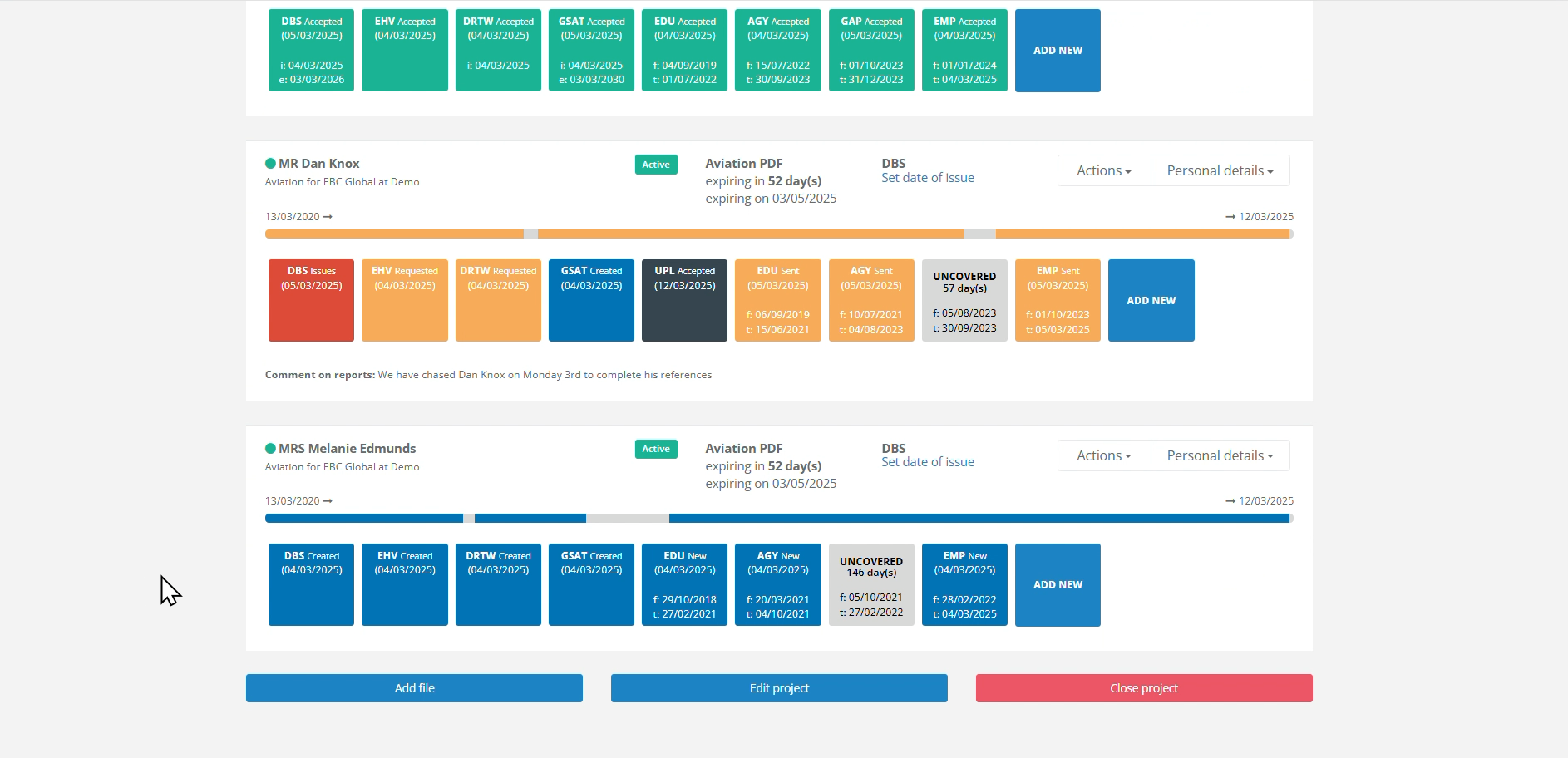
EBC Global Pro provides a dashboard with traffic-light-style status indicators, helping teams see where candidates are in the screening process and identify checks that require attention.
This visibility makes it easier to prioritise work, follow up on outstanding actions and keep recruitment plans moving.
Instead of searching through emails or contacting multiple providers for updates, teams can manage screening progress through one platform.
Want to spend less time chasing checks and more time progressing candidates?
Start a free 12-day trial of EBC Global Pro to see how centralised screening and automation can simplify your recruitment workflow.
How long do employment background checks take in the UK?
There’s no single turnaround time for every employment background check.
The time required depends on the type of check, the information supplied, the organisations involved and whether further verification is needed.
Some digital identity and eligibility checks may return results quickly, while employment history and qualification verification can take longer when responses are needed from previous employers or institutions.
DBS checks also have different processing times depending on the level of check required.
For example, Enhanced DBS checks can involve additional searches of locally held police information, which may extend processing times.
Although employers can reduce administrative delays before submitting applications, they cannot guarantee how quickly external organisations will complete their checks.
For the latest figures, including differences between Basic, Standard and Enhanced checks, see our regularly updated guide to DBS turnaround times.
When planning onboarding, it’s sensible to account for these differences rather than assuming every candidate will complete screening within the same timeframe.
What causes background check delays?
Even with an efficient screening process, some delays are unavoidable.
Understanding the most common causes can help employers identify which problems they can prevent and which require realistic planning.
| Cause | Reason |
|---|---|
| Incomplete or inaccurate candidate information | Missing details, incorrect documents and inconsistent information can lead to applications being returned or additional clarification being requested.
Collecting and checking information before submission can help reduce these delays. |
| Delays from external organisations | Some background checks depend on responses from third parties, including previous employers, educational institutions, government agencies and police forces.
Their processing times may vary depending on workload, staffing and the complexity of the request. |
| Non-digitised or historical records | Where information is stored in older systems or paper records, verification may require additional manual work.
This can be particularly relevant when confirming older employment or qualification records. |
| Holidays and periods of high demand | Bank holidays, seasonal recruitment peaks and institutional closures can affect how quickly information is received and processed.
Planning ahead is especially important when recruiting large numbers of employees within a short period. |
| Unexpected disruptions | System outages, severe weather and other unforeseen events can occasionally interrupt screening processes.
While employers cannot prevent every disruption, maintaining visibility over outstanding checks makes it easier to communicate delays and adjust onboarding plans. The most effective approach is to separate unavoidable external processing time from delays caused by internal administration. |
How can employers speed up pre-employment screening for high-volume hiring?
For organisations recruiting at scale, small inefficiencies can quickly become significant.
Manually entering candidate details, sending individual screening requests and checking the status of every application may be manageable for a few new starters.
But when you’re onboarding dozens or hundreds of candidates, those same tasks can place considerable pressure on HR and recruitment teams.
The key is to create a screening process that can handle increased volumes without requiring the same increase in manual administration.
This might involve:
- Standardising screening requirements: Define which checks are needed for different roles so candidates receive the correct screening requests from the outset.
- Using bulk screening capabilities: Where supported, initiate checks for multiple candidates rather than processing each application individually.
- Automating routine communication: Reduce manual reminders and repetitive requests for candidate information.
- Centralising progress tracking: Give recruitment teams visibility over completed checks, outstanding actions and applications requiring attention.
- Integrating screening with recruitment systems: Reduce duplicate data entry and unnecessary movement between platforms.
For organisations with regular recruitment demands, the right employment screening software can help bring these activities together.
Rather than relying on separate spreadsheets, inboxes and screening portals, recruitment teams can work from a more consistent and manageable process.
This can be particularly valuable in sectors such as healthcare, education, care, security and logistics, where screening requirements may be extensive and recruitment volumes can fluctuate.
How EBC Global helps employers manage faster background checks
Fast background checks aren’t simply about getting results as quickly as possible.
They’re about building a screening process that reduces unnecessary work, maintains accuracy and gives employers greater control over their recruitment timelines.
At EBC Global, we help organisations streamline employment screening through technology, automation and centralised check management.
Our background screening platform allows employers to manage multiple types of background checks through one system, helping reduce the need for disconnected processes and repetitive administration.
With features including digital candidate data collection, screening automation, progress tracking and integration capabilities, EBC Global supports HR and recruitment teams looking to make their screening workflows more efficient.
As a DBS Registered Body and Responsible Organisation, EBC Global can also process DBS applications directly, helping reduce unnecessary third-party handovers within the application process.
While no screening provider can guarantee the processing time of every external check, the right technology can help eliminate avoidable delays before and around those checks.
Ready to simplify your background check process?
Whether you’re managing occasional recruitment or screening candidates at volume, EBC Global can help you explore a more efficient way to manage employment checks.
Start your free trial to explore EBC Global Pro, or book a demo to see how our screening technology could support your organisation.
Frequently asked questions about fast background checks
For high-volume recruitment, using a centralised screening platform can make it easier to manage checks across multiple candidates.
Features such as bulk processing, standardised screening requirements, automated workflows and progress dashboards can help recruitment teams maintain visibility without relying on separate spreadsheets or manual updates.
Yes. Automation can reduce the time spent on administrative tasks such as collecting candidate information, initiating screening requests, sending notifications and monitoring progress.
Although automation cannot shorten every external verification process, it can help employers reduce unnecessary manual work and improve the overall efficiency of employment screening.
Some types of digital verification may return results on the same day, depending on the service and the information available.
However, not all employment background checks can be completed this quickly. Checks involving previous employers, educational institutions, DBS processing or additional manual verification may take longer.
Employers should avoid assuming that every screening requirement can be completed within a fixed timeframe.
The most effective way to complete employee background checks faster is to reduce avoidable administrative delays. Using digital candidate forms, automated workflows, accurate documentation and centralised progress tracking can help employers move applications through the screening process more efficiently.
However, the completion time of individual checks still depends on their requirements and any external organisations involved.
Disclaimer: This information serves educational purposes only and does not constitute legal advice. Consult legal counsel for specific questions about your practices and compliance.


