
Pre-employment screening is the process employers use to verify a candidate’s identity, eligibility, background and credentials before employment.
It can include checks such as Right to Work, identity verification, DBS checks, employment history verification, references, driving licence checks and other role-specific background checks.
You may also see pre-employment screening referred to as employment screening, background screening, pre-employment checks or employment background checks.
The purpose is simple: to help employers make informed, safer and more compliant hiring decisions.
But effective screening isn’t about carrying out every available check on every candidate. The checks you conduct should be appropriate and proportionate to the role, sector and risks involved.
This guide explains how pre-employment screening works in the UK, the checks employers may need to consider and how organisations can build a more efficient screening process.
What is pre-employment screening?
Pre-employment screening is the process of checking relevant information about a candidate before they start a role.
Depending on the position, this could mean confirming that someone has the legal right to work in the UK, verifying their identity and employment history, checking professional or educational credentials, or carrying out an appropriate criminal record check.
For employers, screening can help answer important questions before somebody joins the organisation:
-
Is this person who they say they are?
-
Do they have the right to work in the UK?
-
Are their employment history and qualifications accurate?
-
Is a criminal record check appropriate or required for the role?
-
Are there role-specific risks that should be checked?
-
Has the screening process been completed consistently and compliantly?
The answers will be different from one role to another.
That’s why a good pre-employment screening process should start with the requirements of the role, rather than a blanket list of checks applied to every candidate.
Why is pre-employment screening important?
Hiring always involves an element of trust.
Candidates provide information about their identity, experience, qualifications and suitability for a position. Pre-employment screening helps employers verify the information relevant to the hiring decision rather than relying solely on what has been supplied during the application process.
A well-designed screening process can help organisations:
-
meet relevant legal and regulatory obligations
-
verify candidate information
-
identify discrepancies before employment begins
-
make more informed recruitment decisions
-
support safer recruitment
-
protect customers, employees and service users
-
maintain consistent hiring standards
-
create an audit trail of checks completed
Screening can be particularly important in regulated industries or roles involving children, vulnerable adults, financial responsibility, driving or access to sensitive information.
However, more screening doesn’t automatically mean better screening.
Employers need to determine which checks are justified for the particular role and ensure personal information is processed appropriately throughout recruitment.
How does the pre-employment screening process work?
A structured pre-employment screening process takes a candidate from initial data collection through to completed checks and a final screening record.
The exact checks will depend on the role, but the process typically follows these six stages:
1. Invite the candidate to begin screening
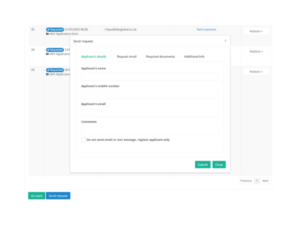
The employer sends the candidate an application form requesting the information required for the appropriate screening or vetting workflow.
This ensures the information collected reflects the checks that may be required for the role.
2. Candidate completes their application

The candidate provides the requested personal, employment and other relevant information through the application form.
Using a consistent digital process at this stage can help reduce incomplete information, manual data entry and unnecessary back-and-forth between candidates and recruitment teams.
3. Review the application and select the required checks
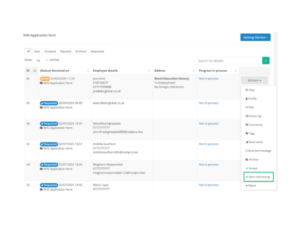
Once the candidate’s information has been reviewed, the employer can proceed with the appropriate screening.
This could involve following a predefined screening package for a particular role or selecting individual background checks based on the position and screening requirements.
4. Candidate information is prepared for each check
Relevant candidate information can then be used to initiate the selected checks.
With an integrated screening platform such as EBC Global Pro, candidate data can be pre-filled into the relevant check sections, reducing the need to repeatedly enter the same information across different parts of the screening process.
5. Screening results are returned
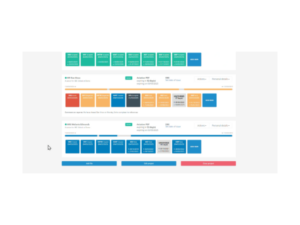
The selected checks are completed and the results or certificates are returned for review.
Through EBC Global Pro, completed results and certificates from relevant governing bodies can be returned directly to the candidate file, giving recruitment teams a central place to track screening progress.
6. Create the final screening record
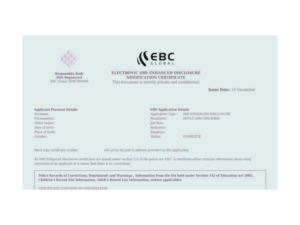
Once screening is complete, the results should be brought together into a clear record of the checks carried out for that candidate.
EBC Global Pro consolidates completed checks and certificates into a final downloadable PDF report, providing employers with a clear record of the completed screening journey.
This approach means the screening process can be managed from candidate invitation through to final compliance report, rather than relying on separate emails, spreadsheets, portals and manual records.
What checks are included in pre-employment screening?
There is no single list of background checks that every UK employer must carry out for every employee.
Instead, organisations should determine the checks that are appropriate for the role.
Common pre-employment screening checks include:
| Check | What it helps establish |
|---|---|
| Identity verification | Confirms that a candidate is who they claim to be |
| Right to Work check | Establishes eligibility to work in the UK |
| DBS check (Criminal Record) | Provides eligible criminal record information at the appropriate level |
| Employment history verification | Verifies previous employment information |
| References | Obtains relevant information from previous employers or referees |
| Education/qualification verification | Verifies relevant qualifications or education |
| DVLA driving licence check | Verifies relevant driving licence information |
| International criminal record check | Supports screening where overseas criminal record information is relevant |
| Credit check | Provides relevant financial information where justified for the role |
| Sanctions and PEP screening | Checks candidates against relevant sanctions and politically exposed person data |
| Social media screening | Reviews relevant publicly available online information using an appropriate process |
The appropriate combination depends on the position.
If you’re trying to determine which checks apply to your organisation or a particular role, read our separate guide to pre-employment checks.
Are pre-employment checks a legal requirement in the UK?
Some are. Others depend on the role or sector, while some are used by employers as part of their own risk-based recruitment process.
For example, employers have a legal responsibility to prevent illegal working and should carry out the appropriate Right to Work check before employing somebody.
Criminal record checking is different.
A Basic DBS check can be used for any purpose, including employment. However, Standard and Enhanced DBS checks are only available where the role meets the relevant eligibility criteria.
An employer cannot simply request an Enhanced DBS check because they would prefer a more detailed criminal record check.
For Standard and Enhanced checks, employers need to establish the appropriate level based on the position and activities involved.
Other checks may be appropriate because of sector-specific regulations, contractual requirements or risks associated with a role.
The key principle is therefore:
Determine what the role requires first, then build the screening process around those requirements.
Right to Work checks
A Right to Work check establishes whether a prospective employee has the right to work in the UK and whether there are any restrictions on the work they can do.
UK employers have a responsibility to prevent illegal working.
The appropriate checking method depends on the individual’s circumstances and the evidence available. This may involve an online Right to Work check using the Home Office service, a digital identity verification route for eligible British and Irish citizens, or a manual document check.
Completing the prescribed process correctly and at the correct time can provide an employer with a statutory excuse against a civil penalty if it is later discovered that an individual was working illegally.
For organisations hiring at volume, incorporating Digital Right to Work and identity verification into the wider screening journey can also reduce manual document handling and create a more consistent process.
Criminal record and DBS checks
DBS checks help employers make safer recruitment decisions by providing criminal record information appropriate to the level of check requested.
In England and Wales, there are several levels of DBS check:
Basic DBS check
Shows relevant unspent convictions and conditional cautions.
Standard DBS check
Provides additional criminal record information and is only available for eligible roles.
Enhanced DBS check
Includes the information available through a Standard check and may also contain relevant information held by local police.
Enhanced DBS with Barred List check
For eligible roles, an Enhanced check may also include a check of the Children’s and/or Adults’ Barred Lists.
Employers are responsible for determining whether a role is eligible for a Standard or Enhanced check and selecting the appropriate level.
Criminal record checking also differs across the UK. DBS operates in England and Wales, while Scotland and Northern Ireland have their own disclosure arrangements.
Employers recruiting candidates who have lived or worked overseas may also need to consider an international criminal record check, because a DBS check does not provide a complete overseas criminal record history.
For more detail on processing times, see our regularly updated guide to current DBS turnaround times.
Employment history and reference checks
Employment history verification helps employers establish whether the employment information supplied by a candidate is accurate.
Depending on the screening requirements, this could involve verifying:
-
employer names
-
employment dates
-
job titles
-
gaps in employment
-
other information relevant to the role
References can also form part of the process, although a traditional employment reference and employment history verification are not necessarily the same thing.
The appropriate level of verification will depend on the organisation and position.
For employers processing significant volumes of candidates, manual reference chasing can become particularly time-consuming. Automating requests, reminders and verification workflows can help reduce the administrative work involved.
Education and qualification verification
For roles where particular qualifications are important, employers may choose or be required to verify the credentials supplied by a candidate.
This can help identify inaccurate or misleading claims relating to degrees, professional qualifications, training or other credentials.
The extent of verification should reflect the requirements of the role.
A qualification that is fundamental to someone’s ability or legal eligibility to perform a job warrants very different consideration from an unrelated qualification listed on a CV.
DVLA driving licence checks
Where driving forms part of a role, employers may need to verify that an employee has an appropriate and valid driving licence.
A DVLA driving licence check can provide information such as:
-
licence status
-
categories of vehicle the individual can drive
-
endorsements
-
penalty points
-
disqualifications
This isn’t limited to businesses that would describe themselves as transport companies.
Organisations in sectors including care, construction, facilities management, logistics and field services may all employ people who drive as part of their work.
For organisations managing fleets or large numbers of drivers, automated DVLA licence checks can also make it easier to carry out repeat checks according to the organisation’s risk and compliance requirements.
Credit checks
Employment credit checks may be appropriate for certain positions, particularly where the individual has significant financial responsibilities or where specific regulatory requirements apply.
Depending on the check, relevant information can include public financial records such as County Court Judgments, insolvencies or other financial information.
However, a credit check shouldn’t automatically be applied to every candidate.
Employers should establish why financial information is relevant to the role and ensure the screening being carried out is proportionate.
Sanctions and PEP screening
Sanctions screening can help organisations identify whether an individual appears on relevant sanctions lists.
Depending on the organisation and role, screening may also include checks relating to Politically Exposed Persons (PEPs) and other risk information.
These checks can be particularly important for organisations subject to financial crime, anti-money laundering or other regulatory requirements, but the screening process should reflect the organisation’s actual obligations and risks.
Social media screening
Social media screening involves reviewing relevant publicly available online information about a candidate as part of a structured recruitment process.
This is an area where employers need to be particularly careful.
A candidate’s social media presence may reveal information relating to protected characteristics that should not influence a recruitment decision.
Employers also need to consider data protection principles when collecting information about candidates from online sources.
For that reason, social media screening should not simply mean a hiring manager casually scrolling through a candidate’s personal profiles.
Where it forms part of recruitment, organisations should establish a clear purpose, consistent methodology and appropriate criteria for assessing information relevant to the role.
Medical and health information
Employers should be cautious about asking candidates questions relating to health and disability during recruitment.
Under the Equality Act 2010, employers are generally restricted from asking health or disability questions before making a job offer, subject to specific exceptions.
There may be circumstances where health information or an assessment is relevant, such as establishing whether somebody can carry out an intrinsic function of a role or meeting particular occupational requirements.
This is an area where employers should ensure their process reflects current equality and employment law rather than routinely applying a generic “medical check” to candidates.
How can employers make pre-employment screening thorough and compliant?
Effective pre-employment screening should be role-based, proportionate, consistent and documented.
That starts before the first check is requested.
Employers should establish which checks are relevant to different roles and why, rather than leaving individual recruiters or hiring managers to decide on an ad-hoc basis.
Important considerations include:
-
determining the appropriate checks for each role
-
establishing a lawful basis for processing candidate information
-
providing candidates with appropriate privacy information
-
collecting only the information required
-
applying screening consistently to comparable candidates
-
checking eligibility before requesting Standard or Enhanced DBS checks
-
restricting access to sensitive screening information
-
establishing appropriate retention and deletion periods
-
documenting screening outcomes
-
regularly reviewing screening policies as requirements change
Candidate screening involves significant amounts of personal information, so data protection needs to form part of the process from the outset rather than being treated as an afterthought.
For a deeper look at designing the process, see our guide to pre-employment background check best practice for HR teams.
How should employers store pre-employment screening data?
Screening can involve personal and sometimes particularly sensitive information.
Organisations should therefore establish clear controls around how screening data is collected, accessed, stored, retained and deleted.
Rather than simply asking whether information is stored in the cloud, on a hard drive or somewhere else, employers should consider questions such as:
Who can access candidate screening information?
What information do we actually need to retain?
How long should different records be kept?
When and how is information deleted?
Can we demonstrate when a check was completed?
Do our screening providers meet appropriate information-security standards?
Can we produce an audit trail if required?
The ICO provides specific data protection guidance for recruitment and selection, covering the use of candidate information throughout the recruitment lifecycle.
How often should employment checks be repeated?
There is no universal rule that every employment check should be repeated annually, every six months or at another fixed interval.
The correct approach depends on the check, the role, applicable regulations and the organisation’s risk assessment.
Some checks relate primarily to the point of recruitment. Others may need repeating because the underlying information can change.
For example, an organisation managing employees who drive for work may decide that driving licence information needs to be reviewed periodically.
For DBS checks, employers should consider the requirements applying to their sector and role rather than automatically assuming that a new DBS certificate must be obtained every six or twelve months. The DBS Update Service can also help eligible employers check whether relevant certificate information has changed, subject to the rules of the service.
The important thing is to define the organisation’s screening requirements and review schedule rather than relying on an arbitrary frequency for every check.
Manual vs automated pre-employment screening
The challenge for many employers isn’t understanding that screening needs to happen.
It’s managing the process efficiently when recruitment volumes increase.
A manual process can involve candidate information moving between emails, spreadsheets, HR systems, screening providers, government services and separate check portals.
That creates more administration and more opportunities for information to be delayed, duplicated or missed.
An automated screening platform can bring more of that journey together.
| Manual screening | Automated screening |
|---|---|
| Candidate information across emails and forms | Centralised candidate journey |
| Repeated manual data entry | Connected screening workflows |
| Individual check portals | Multiple checks initiated from one platform |
| Manual reminders and chasing | Automated notifications and workflows |
| Status tracked across spreadsheets | Central screening visibility |
| Results held separately | Consolidated screening record |
| Manual scheduling of repeat checks | Automated rescreening workflows where appropriate |
Automation doesn’t remove an employer’s compliance responsibilities.
It can, however, make an appropriately designed screening process easier to manage consistently.
How long does pre-employment screening take?
There is no single pre-employment screening turnaround time because the overall process depends on the checks required.
Some checks can be completed quickly, while others rely on information from previous employers, government bodies, police forces or overseas authorities.
Turnaround can also be affected by incomplete candidate information or unnecessary manual hand-offs between different providers and systems.
This makes it useful to distinguish between the time a check genuinely needs to take and avoidable administration surrounding the check.
For example, employers cannot control how long a police force needs to assess relevant information during an Enhanced DBS check. They can control how efficiently candidate information is collected, verified and submitted beforehand.
If DBS processing is affecting your recruitment timelines, see our regularly updated guide to DBS turnaround times for the latest Basic, Standard and Enhanced figures.
How much does pre-employment screening cost?
The cost of pre-employment screening depends on the checks required, candidate volumes and the way an organisation manages screening.
Some checks carry statutory or third-party fees, while screening software or providers may charge separately for processing and administration.
Employers should therefore consider more than the individual price of a check.
The administrative time required to request checks, chase candidates, monitor progress and maintain records can also contribute to the overall cost of screening.
For criminal record screening specifically, see our guide to current DBS check costs and fees.
For organisations comparing wider screening options, EBC Global’s packages provide different levels of access depending on screening requirements and volumes.
What should employers look for in a pre-employment screening provider?
A good screening provider should do more than simply give employers access to individual checks.
Consider how the provider fits into your overall recruitment process.
Questions worth asking include:
Which checks can we manage through the provider?
Look at your actual screening requirements rather than choosing based on the longest list of available checks.
How much of the process is automated?
Understand which tasks your HR or recruitment team will still need to complete manually.
Are unnecessary third-party hand-offs involved?
Additional providers can introduce extra steps into the process. Where a provider can process checks directly or integrate with the relevant source, this can help create a more streamlined journey.
Can it integrate with our existing recruitment technology?
For higher-volume employers, API or system integrations can prevent screening becoming an isolated part of recruitment.
What does the candidate experience look like?
A screening process should also be straightforward for the person completing it.
Can we track candidates and outstanding checks?
Recruiters should be able to see where candidates are in the process without manually chasing every application.
How is information protected?
Review information-security standards, access controls and how candidate data is handled.
Can the process scale?
A process that works for ten candidates needs to remain manageable when recruitment volumes increase substantially.
How EBC Global supports pre-employment screening
EBC Global helps organisations manage pre-employment screening through EBC Global Pro, bringing multiple employment checks into one platform.
Employers can manage screening such as Right to Work and identity verification, DBS checks, employment history verification, DVLA checks and other background checks without building a separate manual process around every check.
Automation helps reduce repetitive administration, while candidate tracking gives recruitment and HR teams greater visibility of screening progress.
Our direct relationships can also reduce unnecessary hand-offs.
For example, EBC Global is a DBS Registered Body and Responsible Organisation (RB/RO), allowing us to process eligible DBS applications directly rather than adding an unnecessary third-party provider into the journey.
For organisations that already have established recruitment technology, our employment screening API can also bring checks into existing workflows.
The result is not about removing the important checks or decisions involved in recruitment.
It’s about removing unnecessary administration around them.
Ready to automate your pre-employment screening?
Explore EBC Global Pro with a free 12-day trial, or book a demo to see how EBC Global can support your organisation’s screening requirements.


