
If your employees drive as part of their job, checking their driving licence is an important part of ensuring they are appropriately licensed for the vehicles they use. A DVLA check allows employers to verify driving licence information held by the Driver and Vehicle Licensing Agency, including vehicle entitlements, penalty points, and disqualifications.
For organisations recruiting drivers or managing employees who drive for work, these checks can form an important part of both pre-employment screening and ongoing workforce compliance.
But how does an employer actually carry out a DVLA check? What information is needed, how do driving licence check codes work, and what happens when you need to check hundreds of employees rather than just one?
This guide explains the process, including how to use the government’s online service and how employers can manage DVLA driver licence checks more efficiently through EBC Global.
What is a DVLA check?
A DVLA check is a way of verifying driving licence information held by the Driver and Vehicle Licensing Agency. It allows an employer or another authorised organisation to establish whether an individual holds the appropriate driving entitlement and review relevant information recorded against their licence. This can include the types of vehicles the person is entitled to drive, penalty points, and any recorded disqualifications.
For employers, a DVLA check helps establish whether a candidate or employee has the appropriate licence for driving duties associated with their role. However, a driving licence check is only one part of managing occupational road risk, employers may also need to consider driver competence, vehicle suitability, insurance, and other relevant requirements.
For a broader explanation of driving licence verification, employer responsibilities and ongoing monitoring, read our UK Driver Check guide.
How can an employer check an employee’s driving licence?
There are two common approaches to checking an employee’s DVLA driving licence information. Employers can use the government’s online driving licence checking service or manage checks through an authorised driving licence checking provider.
The most suitable approach will depend on the number of drivers, how frequently checks are required, and how the organisation manages its wider screening process.
Option 1: Check an employee’s driving licence through GOV.UK
The government provides an online service that allows employers and other authorised parties to check someone’s driving licence information.
To complete a check, the employer needs:
- A driving licence check code provided by the driver.
- The last eight characters of the driver’s driving licence number.
- The driver’s permission to access their information.
Once the employer has these details, they can use the GOV.UK service to view the relevant driving licence information.
When is the GOV.UK service the right choice?
For employers carrying out a small number of driving licence checks, the government’s online service may be all that’s needed. For example, a business checking between one and five driving licences occasionally may find it more practical to use the GOV.UK service directly, particularly if it already has a straightforward process for obtaining driver permission and recording the results.
However, as the number of checks increases, so does the administration involved. The key consideration is therefore not just how many licences need checking, but how frequently checks are required, and whether driving licence verification forms part of a wider employment screening process.
Option 2: Use a DVLA driving licence checking provider
Employers conducting regular DVLA checks may prefer to use a provider that can incorporate driving licence verification into an established screening process. Rather than managing individual checks separately, organisations can initiate and manage driving licence checks alongside other relevant employment screening.
With EBC Global Pro, employers can manage DVLA driving licence checks through a centralised screening platform. This is particularly useful for recruitment teams, fleet managers, and operations departments responsible for checking multiple employees across different roles or locations.
The advantage is not simply completing a DVLA check. It is having a consistent process for requesting checks, reviewing results, and managing the information required to make screening decisions.
When is a DVLA checking provider the better option?
For employers recruiting drivers regularly, managing larger workforces, or carrying out several employment checks per candidate, a dedicated screening platform can provide a more practical solution. Rather than requesting driving licence information separately, employers can manage DVLA checks alongside other screening requirements, such as Right to Work, identity verification, DBS checks, and employment history verification.
This is particularly useful for logistics and transport businesses, recruitment agencies and organisations with employees who regularly drive for work.
With EBC Global Pro, recruitment and compliance teams can initiate checks, manage candidate actions, record consent, and review screening results through one platform. For organisations processing checks at volume, this helps reduce repeated administration while giving teams greater visibility over the candidate’s screening journey.
If you’re regularly checking employees’ driving licences or managing multiple background checks per candidate, EBC Global’s free 12-day screening trial lets you experience the process for yourself.
What is a DVLA check code?
A DVLA check code allows a driver to share their driving licence information with another person or organisation. Employers commonly use these codes to access driving licence information through the government’s online checking service.
A DVLA check code is valid for 21 days and can only be used once. This means an employer needs to complete the check within the permitted period. If the code expires or has already been used, the driver will need to generate another one.
For employers processing large numbers of applications, managing these codes and ensuring checks are completed before they expire can add another administrative step to recruitment processes.
How does an employee generate a DVLA check code?
An employee or candidate can generate a check code using the government’s online driving licence service. They will normally need:
- Their driving licence number.
- Their National Insurance number.
- The postcode recorded on their driving licence.
The driver can then access their driving licence information and generate a code to share with the employer. The employee should provide the generated code to the employer together with the information required to complete the check.
How does an employer use a DVLA check code?
Once the employer receives the check code, they can access the government’s driving licence checking service. The employer enters the code and the last eight characters of the driver’s licence number, then service then displays the driving licence information available for that individual.
The employer can review the information to establish whether the driver has the appropriate entitlement for the duties they are expected to perform. Where necessary, the employer should record the outcome in accordance with its screening and data protection policies.
For recruitment teams, this process may be manageable when checking one or two drivers. For organisations onboarding dozens of drivers each week, however, repeatedly collecting codes, accessing the service, and recording outcomes can become time-consuming.
What information can an employer see from a DVLA check?
A DVLA driving licence check can provide information about the driver’s recorded licence entitlements and driving history. Depending on the information held, this can include:
- Driving entitlements: The categories of vehicle the individual is permitted to drive.
- Penalty points: Relevant penalty points recorded against the licence.
- Driving endorsements: Endorsements appearing on the driver’s record.
- Disqualifications: Any recorded driving disqualifications.
- Licence information: Relevant details about the driver’s licence and its validity.
Additional information available through EBC Global
Depending on the driver’s record, EBC Global’s DVLA checking service can also provide:
- Licence validity dates and recorded licence status.
- Vehicle entitlement start and end dates.
- Provisional driving entitlements.
- Driving endorsement offence codes, descriptions and dates.
- Driver Certificate of Professional Competence (CPC) information, where applicable.
- Digital tachograph card information, where applicable.
Results are presented in an final vetting report, giving employers a structured overview of the driver’s licence information.
Medical information is not provided through the DVLA checking service. This is particularly relevant for employers recruiting professional drivers who need to verify specific vehicle entitlements and associated qualifications.
For example, an employer recruiting an HGV driver needs to establish that the individual holds the appropriate driving entitlement for the vehicle they will operate. Similarly, an organisation employing delivery drivers or field engineers may need to establish whether employees are appropriately licensed for their work-related driving duties.
A DVLA check helps provide the information needed to make those hiring decisions.

For more information about driving entitlements, employer responsibilities and the different information available through a UK driving licence check, see our UK Driver Check guide.
Do employers need permission to carry out a DVLA check?
Yes. Employers must have appropriate permission to access an individual’s driving licence information. The government’s online checking service requires information provided by the driver, including a valid check code.
It is a criminal offence to obtain another person’s driving licence information without their permission.
Employers should also consider their responsibilities under applicable data protection legislation when collecting, accessing, storing, and using driving licence information. This includes establishing an appropriate lawful basis for processing the information, being transparent about how it will be used, and ensuring that access is limited to those who need it.
Importantly, permission to access DVLA information and the lawful basis for processing personal data are not necessarily the same thing. For employers conducting frequent checks, managing these requirements consistently is an important part of the screening process.
How EBC Global Pro simplifies candidate consent management
When employers manage several employment checks, requesting separate consent for each check can create unnecessary administration, and repeated candidate contact. EBC Global Pro allows employers to customise consent forms and include them within the candidate’s structured screening journey.
The process is straightforward:
- The driver receives an invitation. An email containing a consent link is sent automatically, with the option to send a text notification.
- The driver reviews the declaration. This explains who is requesting the information, why the check is being carried out and what information will be disclosed.
- The driver provides consent. Once submitted, the driver receives confirmation and the check can proceed.
Consent can cover a period of up to three years, allowing employers to schedule subsequent checks without repeatedly contacting the driver for permission. But, drivers can withdraw their consent at any time.
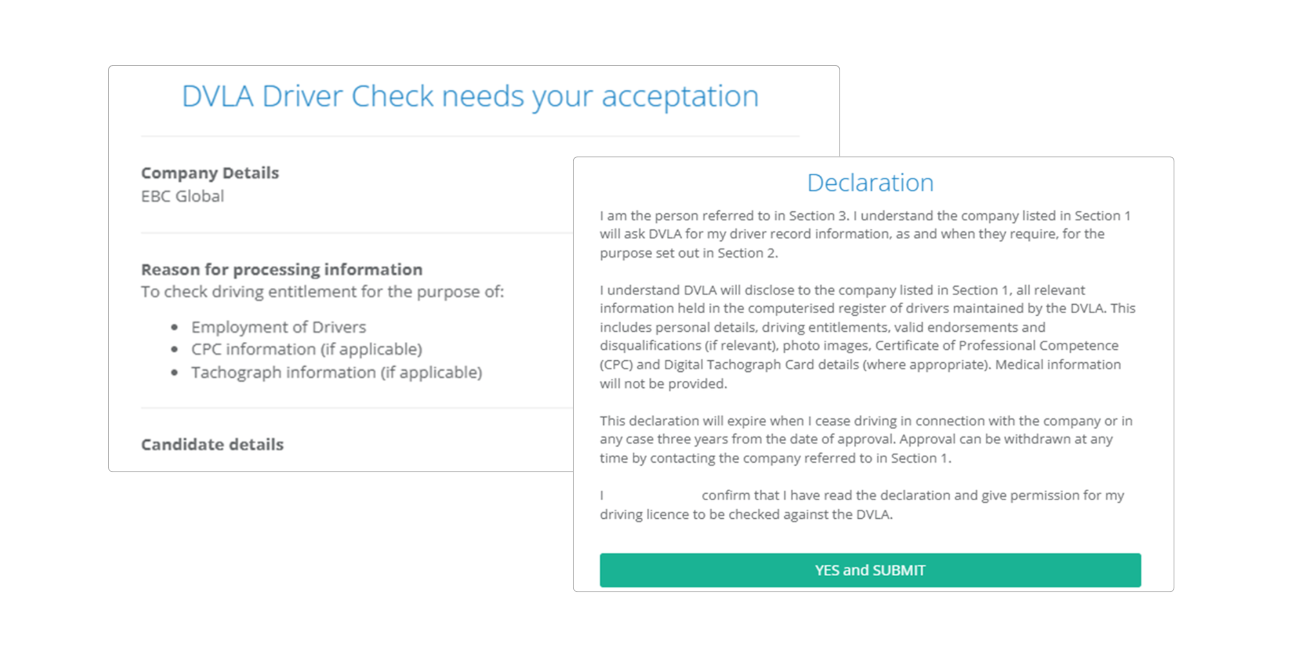 Candidates can provide the required permissions as part of the wider screening process, with the completed consent records stored against their screening information. This gives recruitment and compliance teams a central record of the permissions obtained, making it easier to demonstrate how consent was collected and which checks it relates to.
Where appropriate, consent requirements for multiple employment checks can be incorporated into the same candidate journey, rather than repeatedly asking individuals to complete separate forms.
For employers managing high-volume recruitment, this can mean less administration, fewer unnecessary candidate interactions and a more consistent screening experience.
Can an employer check a driving licence without a DVLA check code?
The standard GOV.UK online checking service requires a valid check code and the last eight characters of the driver’s licence number. Where the driver cannot provide a code, employers may need to consider an alternative DVLA checking route. The government also provides a postal checking process, subject to its requirements and charges.
Employers using an authorised driving licence checking provider may have access to a different checking workflow, depending on the provider’s arrangements and the permissions obtained. The important point is that employers must use an appropriate authorised process.
They should not attempt to access driving licence information without the driver’s permission.
When should employers carry out DVLA licence checks?
Driving licence checks are particularly relevant when an individual is being recruited into a role that involves driving.
For example, a recruitment agency supplying delivery drivers may need to verify the candidate’s driving entitlement before placement, and a logistics business recruiting HGV drivers needs to establish that new starters hold the appropriate licence categories.
However, DVLA checks are not limited to transport businesses. They can also be relevant to organisations employing field engineers, mobile care workers, construction staff, sales representatives and other employees who drive as part of their work.
Employers should establish a proportionate checking policy based on the duties of the role, relevant risks, and any applicable requirements.
Pre-employment DVLA checks
A pre-employment DVLA check helps an organisation verify driving licence information before an individual begins driving duties. This can help recruitment teams identify relevant issues before a candidate is authorised to drive for work.
Where driving is a requirement of the position, incorporating licence verification into the pre-employment screening process can help ensure the appropriate checks are completed before the employee starts.
Ongoing DVLA licence checks
An employee’s driving record can change after they have joined an organisation. Penalty points, disqualifications, and changes to driving entitlements can all affect whether an employee remains appropriately licensed for their duties.
This means a licence check completed during recruitment may not be sufficient for an organisation’s ongoing driver management requirements.
At EBC Global, we recommend that employers consider conducting DVLA driving licence checks at least once a year as a starting point for their screening policy. However, the appropriate frequency should reflect the organisation’s risk profile, the nature of the driving duties and any relevant regulatory, insurance or contractual requirements.
For example, an organisation managing HGV drivers, delivery fleets or employees who spend significant amounts of time on the road may decide that more frequent checks are appropriate. Employers should also consider whether additional checks are necessary following a change in an employee’s driving circumstances or where a potential licensing issue has been identified.
The important point is that driving licence verification should not automatically be treated as a one-off pre-employment check. A consistent rechecking policy helps employers maintain visibility over the suitability of employees who drive for work.
For a broader explanation of ongoing driver screening and monitoring, read our UK Driver Check guide.
How EBC Global automates ongoing DVLA checks
For employers managing multiple drivers, remembering when each driving licence needs rechecking can become a significant administrative responsibility. EBC Global Pro allows organisations to schedule automatic DVLA licence rechecks every 1, 2, 3, 6 or 12 months, depending on their screening requirements.
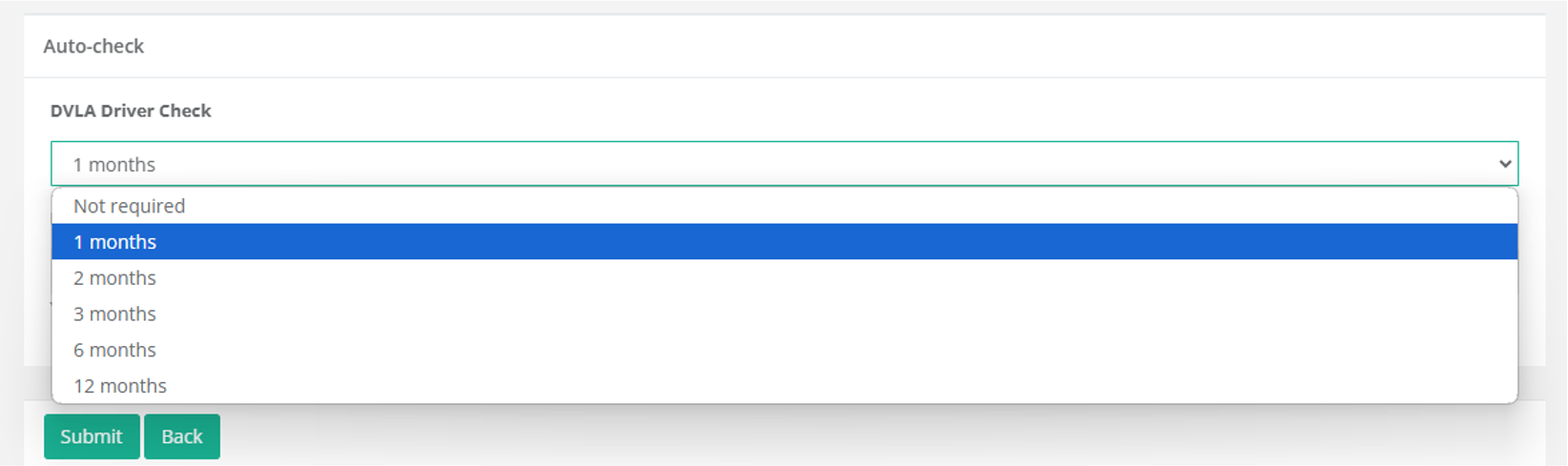
Once the driver has provided the appropriate consent, checks can run automatically at the selected interval without requiring the employee to repeat the consent process each time. Driver consent can remain valid for up to three years, unless withdrawn or the individual stops driving in connection with the organisation.
For example, an organisation might choose more frequent checks for HGV drivers or employees who spend significant time on the road, while adopting a different schedule for occasional drivers.
The appropriate frequency should always reflect the organisation’s risk assessment and driving policy. This gives employers a more consistent approach to ongoing driving licence verification while reducing the administration associated with requesting and completing individual checks.
What is the difference between manual and managed DVLA checks?
For employers checking a small number of driving licences, the government’s online service may provide everything they need. However, the process becomes more demanding when an organisation needs to manage checks across multiple departments, locations or recruitment campaigns.
Consider a logistics company recruiting drivers across several depots. The recruitment team needs to request driving licence information, ensure candidates complete their actions, review the results, and maintain visibility over which applicants are ready to progress.
At the same time, the operations team may need to manage ongoing checks for existing drivers. If these activities are handled separately, it becomes harder to maintain a consistent picture of workforce screening.
This is where a managed screening process can provide additional value.
| Manual DVLA checking | Managed screening through EBC Global |
|---|---|
| Individual checks initiated through the government service | Checks initiated through a central screening platform |
| Check codes and candidate information collected separately | Candidate actions managed through a structured screening journey |
| Results reviewed and recorded manually | Screening results accessible through the platform |
| Separate processes for other employment checks | DVLA checks managed alongside relevant background checks |
| Additional administration when checking large numbers of drivers | A more consistent workflow for higher-volume recruitment |
For organisations that want to explore the operational benefits in more detail, read our guide to simplified DVLA licence checks.
How EBC Global simplifies DVLA checks for employers
EBC Global helps organisations move away from managing driving licence checks as isolated administrative tasks. Through EBC Global Pro, employers can customise consent forms, and incorporate DVLA licence checks into their wider employment screening process. This is particularly valuable when an organisation needs to conduct several checks on the same candidate.
For example, a driver joining a logistics business may need identity verification, a driving licence check, Right to Work verification, references and other relevant screening. Rather than managing each requirement through a separate candidate journey, employers can bring the checks together through one screening process.

A DVLA checking process you can have confidence in
When choosing a DVLA licence checking provider, employers need confidence that driving licence information is being accessed and managed through an appropriate, secure process. EBC Global’s DVLA checking service has undergone a DVLA audit, providing an additional demonstration of our commitment to meeting the requirements associated with accessing and handling driving licence information.
For organisations responsible for large numbers of drivers, this is an important consideration when selecting a screening partner. Speed and convenience matter, but so do data handling, compliance and having confidence in the processes supporting each check.
You can read more about our experience in our DVLA audit article.
A connected candidate screening journey
The experience candidates receive matters just as much as the process available to recruitment teams. Repeated document requests, unclear instructions, and disconnected checking systems can create unnecessary work for both sides.
EBC Global’s screening solutions are designed to make it easier for candidates to complete their required actions while giving employers visibility over the checks being carried out.
In one EBC Global HI-ID screening workflow combining ID verification, Right to Work, address and mortality verification, international sanctions and PEPs screening, DVLA driver check, and automated DBS submission, all required checks were returned within 24 minutes of candidates completing their actions.*
This example demonstrates the potential value of bringing different checks into one connected process rather than managing them separately. For employers recruiting at volume, the operational benefits can include fewer manual touchpoints, clearer screening progress, and less time spent coordinating different checking activities.
* This result reflects an example recorded within EBC Global’s screening process. Individual completion times vary and depend on the checks required and any third-party processing involved. It is not a guaranteed turnaround time.
Experience the process yourself
The most useful way to assess a screening platform is to see how it works for both your recruitment team and your candidates. EBC Global offers a free 12-day screening trial, allowing employers to explore the platform and experience the screening journey.
Whether you are recruiting drivers, managing a mobile workforce, or looking to simplify your wider employment screening process, you can see how EBC Global Pro fits into your existing recruitment operations.
Frequently asked questions about DVLA checks
There is no single annual checking rule that applies universally to every employer. The appropriate frequency depends on the role, associated risks and any relevant organisational, insurance, or regulatory requirements.
Employers managing larger numbers of drivers can use driving licence checking providers and screening platforms to help coordinate checks across their workforce. EBC Global offers a free 12-day screening trial, allowing employers to explore the platform and experience the screening journey.
Yes. The DVLA checking service can show penalty points recorded against the driving licence.
For the standard GOV.UK online service, the employer needs a valid check code and the last eight characters of the driver’s driving licence number.
A DVLA check code is valid for 21 days and can only be used once.
Yes, an employer can check your driving licence information using an appropriate authorised process and with the required permission.


