
International criminal record checks are becoming an increasingly important consideration for UK employers recruiting candidates who have lived or worked overseas.
Whether you’re hiring international talent, screening applicants with employment histories across multiple countries or managing a globally mobile workforce, your background screening process needs to reflect where your candidates have been.
But while recruitment has become more international, are employers’ screening processes keeping pace?
A candidate may have spent several years living or working abroad before applying for a role in the UK. Although a DBS check can provide important criminal record information, it does not routinely cover records held overseas.
This is where international background checks, including overseas police checks and criminal record checks for overseas applicants, can help employers build a more complete picture of a candidate’s history.
Your screening process shouldn’t stop at the UK border.
What Are International Criminal Record Checks?
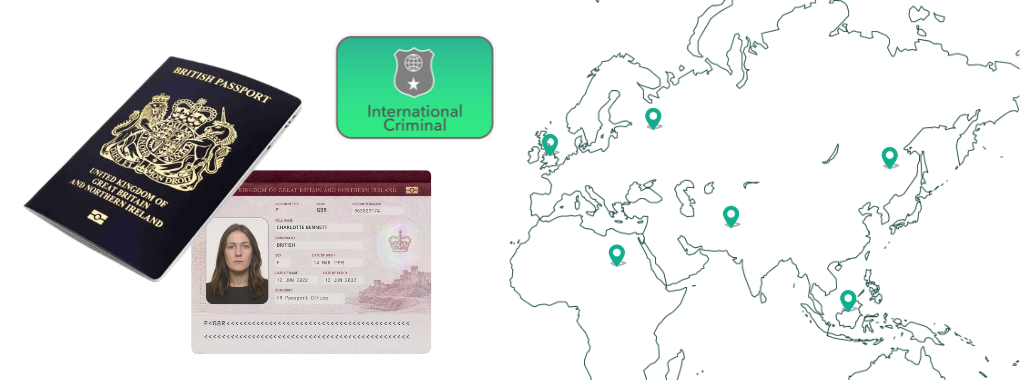
International criminal record checks are pre-employment background checks used to obtain relevant criminal record information from countries outside the UK.
They help employers screen candidates who have previously lived, worked or studied overseas, providing additional information that may not be available through standard UK criminal record checks.
Depending on the country, an international criminal record check may involve obtaining a police clearance certificate, searching accessible court records or requesting information from an authorised criminal records authority.
You may also come across terms such as international police checks, overseas police checks or international criminal background checks. Although these terms are often used interchangeably, the information available and the process involved can vary significantly between countries.
Unlike UK criminal record screening, there is no single international application process covering every jurisdiction. Each country has its own rules around who can request criminal record information, what documentation is required and how results are issued.
For employers recruiting internationally, understanding these differences is an important part of maintaining a consistent and proportionate screening process.
Why International Criminal Record Checks Matter for UK Employers
Consider a candidate applying for a position in the UK who previously spent five years living and working overseas.
The employer conducts the appropriate UK background checks, including a DBS check where eligible, and receives satisfactory results.
But what about those previous five years abroad?
According to official DBS guidance for employers UK criminal record checks do not routinely provide access to criminal records held overseas, meaning additional checks may be appropriate for candidates who have lived abroad.
International criminal record checks help employers consider relevant overseas criminal history as part of their wider recruitment screening.
This can be particularly important when recruiting for positions involving safeguarding responsibilities, financial accountability, security, access to sensitive information or other positions of trust.
However, international screening isn’t necessarily about conducting more checks on every candidate. It’s about identifying which checks are appropriate, understanding what information is available and applying a proportionate approach based on the responsibilities of the role.
For employers managing international recruitment, that means looking beyond where a candidate is applying from and considering where their career has taken them.
When Should Employers Consider Criminal Record Checks for Overseas Applicants?
As organisations recruit from increasingly international talent pools, it’s becoming more common to encounter candidates whose employment and residential histories span several countries.
There are a number of circumstances where criminal record checks for overseas applicants may be relevant.
| Recruitment Scenario | When International Criminal Record Checks May Be Needed |
|---|---|
| Recruiting candidates who have previously lived overseas | A candidate may have lived or worked in several countries before moving to the UK.
Depending on the role and applicable requirements, employers may need to consider whether criminal record information from those countries would provide relevant additional assurance. |
| Hiring international talent | When recruiting directly from overseas, employers may need to obtain criminal record information from a candidate’s current or previous country of residence.
The type of international police check available will depend on the country’s legislation and application requirements. |
| Screening internationally mobile employees | Employees transferring between international offices, returning from overseas assignments or relocating for a new position may have employment histories spanning multiple jurisdictions.
A consistent international background checks process can help organisations establish appropriate screening requirements across their workforce. |
| Meeting industry-specific screening requirements | Certain roles and regulated sectors may have specific requirements concerning overseas criminal record screening.
Employers should establish which requirements apply to the position and whether additional checks are necessary. The key is to identify international screening requirements early, rather than discovering gaps in a candidate’s history towards the end of the recruitment process. |
How Do International Criminal Record Checks Work?
One of the biggest challenges with international criminal record checks is that the process can differ significantly from one country to another.
The Home Office publishes country-specific guidance on criminal record checks for overseas applicants, demonstrating how application processes and requirements differ between jurisdictions.
There is no universal criminal record certificate that provides the same information across every jurisdiction.
Some countries allow authorised screening providers to request criminal record information, while others require candidates to obtain certificates directly from the relevant authority.
Although the exact process varies, international criminal record screening generally involves the following stages.
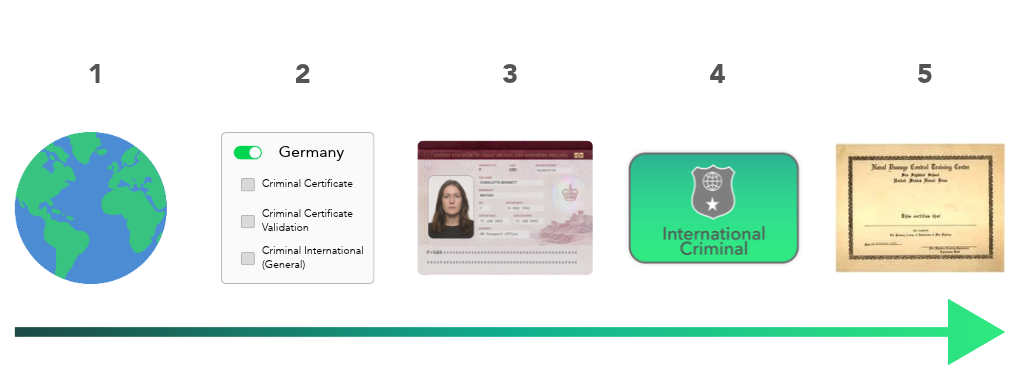
1. Identify the relevant countries
The first step is understanding where the candidate has previously lived or worked and which countries are relevant to the screening requirements of the role.
For candidates with international employment histories, this may involve considering checks across multiple jurisdictions.
2. Establish the available checks
Different countries offer different types of criminal record screening.
Depending on the jurisdiction, this may include police-issued criminal record certificates, court record searches or other authorised criminal history checks.
The information available and eligibility requirements will vary.
3. Gather candidate information and documentation
Candidates may need to provide identification documents, previous addresses, consent forms or additional supporting information.
Some countries may also require certified documents, translations or specific application forms.
4. Request the check or obtain the certificate
Where permitted, the screening provider may be able to facilitate the criminal record check.
In other countries, the candidate may need to apply directly to the relevant authority and supply the resulting certificate.
5. Review and validate the results where appropriate
Once the criminal record information has been obtained, employers should consider whether the results meet their screening requirements.
Where a candidate has supplied their own certificate, an additional validation process may be appropriate to help establish the document’s authenticity.
This final stage is particularly important, as receiving a certificate does not automatically mean it has been independently verified.
What Does an International Criminal Record Check Report Include?
Once an international criminal record check has been completed, employers need a clear way to understand the results and review any information returned.
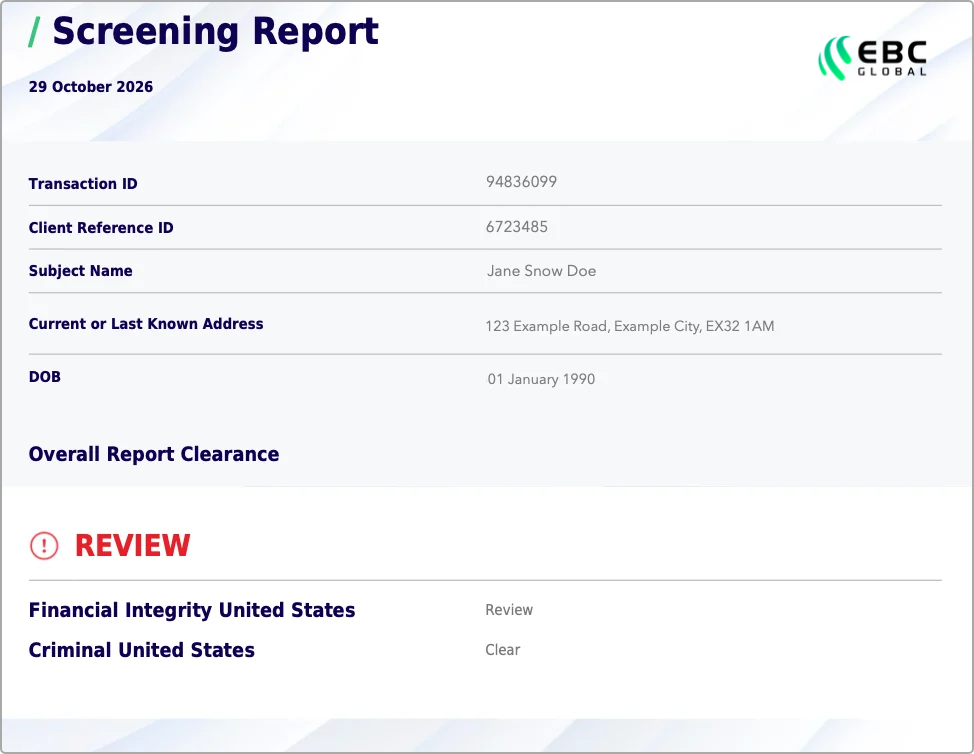
EBC Global provides structured screening and vetting reports that bring together the results of the checks conducted, helping employers review relevant findings as part of their recruitment process.
Depending on the country and the type of check requested, an international criminal record check report may include:
- Candidate information: Identifying details used for the screening, such as the candidate’s name and date of birth.
- Country of service: The country where the criminal record search was conducted.
- Screening outcome: A result status indicating whether the check has been marked as clear or requires review.
- Criminal record details: Where applicable and available, information such as case dates, court locations, offences, file references or sentencing decisions.
- Information sources: Details of the sources used to conduct the search, where provided.
- Check-specific results: Individual outcomes for each screening component included in the report.
For example, an international criminal record screening report for the United States may show the criminal history check outcome alongside the relevant information source, such as local state courts.
Where multiple background checks are requested, the report may also include other screening components, such as financial background checks, with separate results for each.
This allows employers to distinguish between the outcomes of different checks rather than relying solely on an overall report status.
Importantly, a clear result should always be understood within the scope of the specific check conducted. It does not necessarily confirm that a candidate has no criminal history anywhere in the world.
By presenting international screening results in a structured shareable format, we help employers review the information returned and make more informed recruitment decisions.
Want to see what an international criminal record check looks like?
Explore an example of EBC Global’s screening report to see how results are presented and what information may be included.
Overseas Police Checks: Is a Candidate-Provided Certificate Automatically Verified?
Just because a candidate provides an overseas criminal record certificate doesn’t mean the document has been independently verified. This is an important distinction that can be overlooked during international recruitment.
In some countries, criminal record certificates can only be requested by the individual concerned. In other situations, an employer may ask the candidate to obtain an overseas police check themselves and provide the certificate as part of their pre-employment screening.
But receiving a document and verifying its authenticity are two different things.
Consider a candidate who previously worked overseas and is asked to provide a police clearance certificate from that country.
The candidate obtains the certificate and emails a copy to their prospective employer.
- The employer now has a document on file, but how do they know it’s genuine?
- Has the certificate been issued by the appropriate authority?
- Has any information been altered?
- Can the details be independently confirmed?
Simply receiving a copy of a certificate does not necessarily answer these questions.
How criminal record certificate validation can help
Where EBC Global cannot request a criminal record certificate directly, criminal certificate validation may be available as a separate service, depending on the country.
Certificate validation can help employers establish the authenticity of a candidate-provided document through the verification methods available in that jurisdiction.
The exact process and level of verification vary between countries, and not every jurisdiction offers the same validation options.
It’s also important to recognise that validating a certificate does not necessarily establish that it contains every relevant criminal record.
However, where available, validation can provide an additional level of assurance and help employers distinguish between a document that has simply been supplied and one whose authenticity has been independently checked.
For organisations regularly conducting overseas police checks, this is an important consideration when reviewing existing screening procedures.
The Challenges of International Background Checks Across Multiple Countries
International recruitment can involve candidates whose careers have taken them across several countries, each with different criminal record screening requirements.
International criminal record screening may also form part of a wider background screening process, alongside employment history verification, qualification checks and other role-specific checks.
For HR teams and recruitment agencies managing large numbers of candidates, coordinating international background checks can introduce additional complexity.
Different country-specific requirements
Each country has its own legislation, criminal record systems and application procedures.
A check available in one country may not be available in another, and the information disclosed can differ depending on local restrictions.
Employers therefore need to understand which screening options are available rather than assuming that the same process can be applied everywhere.
Varying turnaround times
International criminal record check turnaround times depend on the country, the issuing authority, the type of check and the documentation required.
Some applications may be processed relatively quickly, while others can take several weeks or longer.
Where candidates need to request their own certificates, additional time may also be required.
For employers recruiting internationally, accounting for these differences early can help with workforce planning and candidate communication.
Documentation and consent requirements
International criminal background checks may require additional information beyond standard identity details.
Depending on the country, candidates may need to provide previous addresses, identification documents, consent forms or certified paperwork.
Employers need to ensure that screening is conducted lawfully and that personal information is handled in accordance with applicable data protection requirements.
Employers should also consider the ICO’s guidance on pre-employment vetting, particularly when handling criminal offence information and determining whether screening is necessary and proportionate.
Maintaining consistent screening standards
When conducting international background checks, consistency doesn’t necessarily mean applying identical checks in every country.
Instead, it means having a defined screening policy that considers the role, candidate history, local requirements and available screening options.
This can help employers maintain a structured approach to international recruitment while accounting for the differences between jurisdictions.
International Criminal Record Checks with EBC Global
At EBC Global, we understand that recruitment doesn’t stop at international borders, and neither should employers’ consideration of appropriate background screening.
We provide access to a wide range of international criminal record checks, supporting organisations that recruit candidates who have previously lived or worked overseas.
Our wider international background screening offering includes over 9,600 checks across more than 200 countries and territories, covering services such as:
- International criminal record checks and court searches
- Criminal record certificate validation
- Employment history verification and references
- Education and qualification verification
- Credit and financial background checks
- Directorship and company litigation searches
- Driving licence checks and document validation
- Other country-specific background screening services
The availability of individual checks, application requirements, pricing and turnaround times varies by country.
Whether you’re screening a candidate with an overseas employment history or managing recruitment across multiple jurisdictions, EBC Global can help you understand the available screening options and their requirements.
Explore International Criminal Record Check Availability
Not sure which international criminal record checks are available for your candidates?
Our country-by-country screening information can help you explore the available options and understand the different requirements involved.
Is Your International Screening Process Giving You the Full Picture?
Already conducting UK background checks on candidates who have lived or worked overseas?
It may be worth reviewing whether your existing screening process considers relevant international employment histories and whether candidate-provided criminal record certificates are appropriately validated.
Speak to our team about your international screening requirements and the available checking options.
Does Your Screening Process Provide the Complete Picture?
As organisations continue to recruit internationally, it’s important that background screening processes reflect the countries where candidates have lived and worked.
A UK DBS check may be an important part of pre-employment screening, but it does not necessarily provide the complete picture of a candidate’s overseas criminal record history.
Similarly, receiving an overseas criminal record certificate should not automatically be treated as confirmation that the document has been independently verified.
By understanding country-specific requirements, identifying appropriate international criminal record checks and considering certificate validation where available, employers can build a more informed and consistent approach to international recruitment.
Where has your candidate’s career taken them, and does your screening process reflect that journey?
Explore EBC Global’s international criminal record checking services or speak to our team about strengthening your existing screening process.


